
Best Dog Bones for Aggressive Chewers: Safe Alternatives That Actually Last

Every aggressive chewer owner has a version of the same story: you buy a bag of dog bones, your dog finishes all three in one afternoon, and you are left wondering whether any of it was even safe to begin with.
Finding a bone that genuinely satisfies an aggressive chewer, lasts more than one session, and does not come with a list of safety concerns is harder than it should be. This guide is here to make that search straightforward.
We are covering the main types of dog bones available in the US, rating each one honestly on safety, duration, and suitability for aggressive chewers, and pointing you toward what actually works.
The Problem with Most Dog Bones
When most people say "dog bone," they picture the classic rawhide roll or a large, knotted chew from the pet store. But the most widely sold dog bones have significant problems:
Rawhide bones: Processed with bleaching agents and preservatives. Not digestible. Large softened chunks can cause blockages. Not recommended by many veterinarians.
Cooked real bones: The FDA explicitly advises against giving dogs cooked bones. Cooking makes bones brittle, which means they can splinter into sharp fragments that cause lacerations or perforations in the digestive tract. This includes bones from your kitchen, bones sold as "smoked" or "baked" at pet stores, and any other cooked format.
Cheap compressed chews sold as bones: Many products in the "dog bone" section of pet stores are made from poor-quality materials with long ingredient lists of questionable additives.
This does not mean there are no good options. It means you need to know what you are looking at.
Types of Dog Bones and Chews: Honest Ratings for Aggressive Chewers
Raw Bones: The Classic Choice
What they are: Uncooked bones from beef, pork, or lamb, typically sold refrigerated or frozen. Common options include knuckle bones, marrow bones (femur sections), and neck bones.
Safety rating for aggressive chewers: Moderate. Raw bones are significantly safer than cooked bones because they are more flexible and less likely to splinter into sharp fragments. However, there are still important considerations.
Weight-bearing bones from large animals (like beef femur sections) are very dense and hard. For dogs who chew with extreme force, these can cause tooth fractures. Knuckle bones are softer in the cartilage areas and are generally considered a safer choice. Neck bones and rib bones are softer still but are consumed more quickly.
All raw bones carry some risk of bacterial contamination (Salmonella, E. coli) and need to be handled like raw meat: given outdoors or on an easy-to-clean surface, removed after 10 to 15 minutes, and refrigerated between sessions.
Duration for aggressive chewers: Good to excellent, depending on bone size and type.
Best for: Owners who are comfortable with raw food handling protocols. Dogs with healthy teeth who chew steadily rather than biting with maximum jaw force.
Not ideal for: Dogs with dental issues, puppies, dogs in shared living spaces where raw meat handling is inconvenient, owners who want a no-mess, no-refrigeration option.
Yak Chews: The Safest Long-Lasting Alternative to Actual Bones
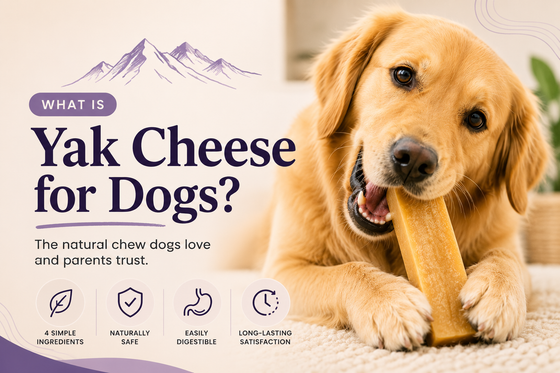
What they are: Hard chews made from compressed, sun-dried yak milk cheese. At Yak Chew Plus, our Heritage Original contains four ingredients: yak milk, lime juice, salt, and baking soda. Nothing else.
Safety rating for aggressive chewers: Excellent. Yak chews do not splinter into sharp fragments. They wear down gradually through gnawing, producing small particles and pieces that are digestible. Yak chews are made from cheese protein, which breaks down in the digestive system the same way other dairy-based foods do.
They are also naturally low in lactose, since the traditional chhurpi production process removes most of the lactose content. The majority of dogs, even those with dairy sensitivities, tolerate yak chews well.
The only fracture risk is from the extreme hardness, which places stress on teeth in dogs that chew with maximum jaw force. This is a consideration with any hard chew, but yak chews are considered to have slightly more give than antlers or very dense beef femur sections.
Duration for aggressive chewers: Excellent. Among the longest-lasting natural chews available. An aggressive chewer who destroys a bully stick in minutes will typically work on a correctly-sized yak chew for several days or longer.
No splinter risk. No chemical processing. No refrigeration required.
Best for: Most aggressive chewers, including large and extra-large dogs. Dogs whose owners want a clean, simple ingredient option without raw food handling protocols.
Trade-offs: Higher upfront cost than a bag of rawhide bones, but the cost-per-hour of chewing is significantly lower. Dogs with existing dental problems should consult a vet before using any hard chew.
Antlers (Elk, Deer, Moose): Maximum Durability, Highest Tooth Fracture Risk
What they are: Shed antlers from elk, deer, or moose, cleaned and sold as dog chews. Sometimes sold split to expose the softer marrow center.
Safety rating for aggressive chewers: Mixed. Antlers are among the hardest materials a dog can chew on. They do not splinter in the way cooked bones do; they wear down as dust and tiny particles. But their hardness also makes them the chew most commonly associated with slab fractures, where a large piece of tooth enamel breaks off under high-impact chewing.
The American Veterinary Dental College specifically lists antlers among the materials most likely to cause tooth fractures in dogs, alongside ice, cooked bones, and very hard nylon chews.
Split antlers, which expose the softer marrow interior, reduce fracture risk somewhat and extend dogs' interest by providing edible content.
Duration for aggressive chewers: Excellent to outstanding. Antlers outlast almost everything else.
Best for: Aggressive chewers with very healthy teeth whose owners are aware of the tooth fracture trade-off and are comfortable accepting it.
Not ideal for: Dogs with any dental history, senior dogs with softer teeth, and the most extreme power chewers who apply maximum jaw force rather than steady gnawing.
Bully Sticks: Safe but Not Long-Lasting Enough for True Aggressive Chewers
What they are: Dried beef pizzle. Single-ingredient in reputable brands.
Safety rating for aggressive chewers: Very good. Fully digestible, no splinter risk, no chemical processing in quality brands. Safe for most dogs.
Duration for aggressive chewers: Poor. A true aggressive chewer will go through even a thick jumbo bully stick in 15 to 30 minutes. If your dog is in the "aggressive chewer" category, bully sticks will disappoint you on duration.
Best for: Moderate chewers, puppies (with supervision), and dogs who do not need maximum duration. Good as an occasional complement to harder chews.
Trade-offs: Not durable enough for the most aggressive chewers. Calorie-dense. Can have a noticeable odor.
Cooked Bones (Store-Bought Smoked, Baked, or Flavored Bones): Avoid
What they are: Bones sold at pet stores that have been smoked, baked, or otherwise heat-processed and flavored. Marketed as "dog bones" but often problematic.
Safety rating for aggressive chewers: Poor. The FDA issued a consumer advisory specifically warning against these products, which have been associated with choking, digestive blockages, lacerations, and tooth fractures. The heat processing that makes them shelf-stable also makes them brittle and prone to producing sharp splinters.
Our recommendation: Skip these entirely. There are too many safer alternatives with better durability to justify the risk.
Nylon Chews (Nylabone-Style): Not Actually Bones
What they are: Flavored nylon chew toys shaped like bones. Not a food product.
Safety rating for aggressive chewers: Mixed and debated. Nylon chews are not digestible. Small pieces that are chewed off and swallowed pass through the digestive system without being broken down. For most dogs, these pass without incident, but there are documented cases of blockages in heavy chewers who chew off larger pieces.
Duration for aggressive chewers: Varies widely. Some very aggressive chewers go through even power-chew grade Nylabones in days. Others last for months.
Our position: Nylon chews are not food and are not the same category as edible bones or chews. We prefer digestible options for dogs that are consuming pieces during chewing, and nylon chews by definition are not digestible.
The Safest Dog Bones for Aggressive Chewers: Decision Guide
Use this to cut straight to the right choice for your situation:
You want maximum duration with the best safety profile, no mess, no refrigeration: Go with a yak chew sized to your dog's weight. It is the closest thing to a perfect aggressive chewer solution that exists in the natural chew category.
You are comfortable with raw food handling and your dog has healthy teeth: Raw knuckle bones or raw marrow bones are a good choice. Use weight-bearing femur sections with caution on dogs that apply extreme jaw force.
Your dog has the absolute strongest jaws you have ever seen and outlasts everything: Try split elk antlers. Accept that tooth fracture risk is higher and monitor closely.
Your dog is not a true power chewer but goes through standard chews quickly: Thick bully sticks or a medium-sized yak chew both work well.
You want to avoid anything your dog could splinter and anything requiring refrigeration: Yak chews are the answer.
How to Size a Bone or Chew Correctly
Sizing matters as much as material choice for aggressive chewers. An undersized chew becomes a swallowing hazard with a dog that chews quickly and forcefully.
For yak chews, size by your dog's weight:
- 5 to 11 lbs: XS
- 11 to 22 lbs: Small
- 22 to 40 lbs: Medium
- 40 to 55 lbs: Large
- 55 to 77 lbs: XL
- 77 lbs and over: XXL
When between sizes, always go up. An aggressive chewer needs a chew large enough that they cannot swallow it whole even when it is partially worn down.
For raw bones, size by your dog's head: choose a bone large enough that your dog cannot get the whole thing in their mouth at once.
Supervision: The Non-Negotiable
No matter which bone or chew you choose, monitor your dog during chew sessions, especially with a new product. Even the safest chew can become a problem if a dog swallows too large a piece.
For yak chews: when the chew wears down to a small nub, do not discard it. Wet it, microwave it for 45 seconds on a microwave-safe plate, and let it cool. It puffs into a light, airy treat your dog can eat safely. Nothing wasted, no risk.
For raw bones: remove the bone if your dog cracks it or if it starts to splinter. Never let a dog be left alone with a raw bone for extended periods.
Final Thoughts
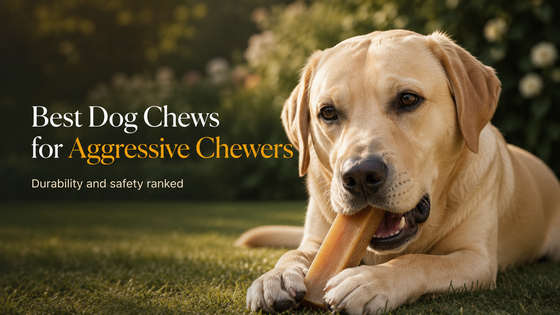
The best dog bone for most aggressive chewers is not actually a bone at all. It is a yak chew.
Yak chews outlast most raw bones on duration per session, carry no splinter risk, require no refrigeration, contain four simple ingredients, and are digestible if pieces are chewed off. For the aggressive chewer owner who wants durability, safety, and simplicity in the same product, a correctly-sized yak chew is the best answer available.
If you specifically want a real bone experience with marrow content, raw knuckle bones are the next safest choice, provided you are comfortable with the handling requirements.
Cooked bones in any form should be avoided entirely.
Join the conversation