
Is Rawhide Bad for Dogs? (And What to Use Instead)

Rawhide has been a staple of the dog chew market for decades. Walk into almost any grocery store or big-box pet retailer and you will find an entire shelf of rawhide rolls, twists, bones, and pressed sticks in every size imaginable. They are cheap, widely available, and dogs clearly love them.
So why are so many vets, animal nutritionists, and dog owners moving away from rawhide?
The answer is not simple or sensationalized. Rawhide is not the most dangerous thing you could give your dog. But when you look carefully at how it is made, what it does in a dog's digestive system, and what alternatives now exist, it becomes hard to justify choosing rawhide when better options are readily available.
This article gives you the full picture: what rawhide actually is, what the real risks are, what the science says, and what you should use instead.
What Is Rawhide, Exactly?
Most people assume rawhide is some kind of dried meat product. It is not. Rawhide is the inner layer of cow or horse hide, separated from the outer layer during the leather-making process. It is a byproduct of the leather industry, not the meat industry.
Here is what typically happens between the slaughterhouse and your dog's mouth:
Step 1: Chemical treatment to remove hair and fat. The raw hides are treated with an ash-lye solution or a lime solution to loosen the hair and separate the hide layers.
Step 2: Soaking in chemicals to preserve and whiten. The hides are then soaked in chemical solutions that often include hydrogen peroxide to bleach them white (raw hide is naturally beige to yellow-gray), along with various preservatives to prevent bacterial growth.
Step 3: Washing and drying. The hides are washed and dried.
Step 4: Shaping and flavoring. The dried hide is pressed or rolled into the familiar bone and roll shapes. Artificial smoke, flavors, and coatings are often added to make the product more appealing to dogs.
Step 5: Packaging. The product is packaged and shipped, often with no requirement to list the processing chemicals on the label because the end product is classified as a pet chew, not a food item.
The result is a product that is not meat, is not food in any meaningful nutritional sense, and has gone through a significant chemical treatment process that leaves residue in the final product.
What Are the Real Risks of Rawhide?
Choking and Blockage
This is the most serious and most widely documented risk. Rawhide softens as a dog chews on it. As it softens, aggressive chewers can bite off large chunks that have not been fully broken down into small, swallowable pieces.
These large, softened pieces do not dissolve in stomach acid easily. They can stick in the throat, causing choking. If swallowed, they can cause intestinal blockages that require surgery to correct.
Gastrointestinal blockages are one of the most common reasons dogs require emergency veterinary care, and rawhide is a documented contributor to this risk. The FDA has received reports of dogs dying from rawhide-related blockages.
The risk is highest with:
- Aggressive chewers who bite off large pieces quickly
- Dogs given rawhide unsupervised
- Cheaper compressed rawhide products that break apart into large chunks
Digestibility Problems
Even smaller rawhide pieces that are swallowed safely are not well-digested. Unlike actual food proteins, chemically processed hide does not break down efficiently in a dog's digestive system. Pieces can linger in the digestive tract, causing digestive upset, vomiting, diarrhea, or, in the worst cases, blockages.
This is a fundamental difference between rawhide and natural food-based chews like yak chews or bully sticks. Food-based chews break down through normal digestion. Rawhide does not.
Chemical Contamination
The processing chemicals used on rawhide, particularly hydrogen peroxide and various preservatives, can leave residue in the final product. Because rawhide is not classified as a food product, it is not subject to the same testing and labeling requirements as food ingredients.
Independent testing has found contamination in rawhide products including:
- Formaldehyde (a known carcinogen used in some preservation processes)
- Arsenic and lead (from chemical treatments)
- Salmonella and E. coli (from contaminated production facilities)
In 2017, the FDA issued import alerts on rawhide products from certain manufacturers after contamination was identified. Recalls of rawhide products have occurred multiple times in the US market.
No Nutritional Value
Rawhide provides essentially no meaningful nutrition. It is not a protein source, not a dental health treatment, and not a supplement of any kind. It is a processed industrial byproduct sold as a chew for the entertainment value it provides to dogs.
This does not automatically make it harmful on its own, but it does mean there is no nutritional upside to weigh against the safety concerns.
Caloric Content That Adds Up
Some rawhide products, particularly those with artificial flavoring added, contain a non-trivial number of calories despite the lack of nutritional value. For dogs on weight management plans, this is an additional consideration.
What Do Vets Say About Rawhide?
The veterinary community is not uniformly against rawhide, but the consensus has shifted significantly in recent years.
The American Kennel Club (AKC) published guidance noting that rawhide carries real risks and recommending supervision during all rawhide use. They specifically note that "some dogs should never be given rawhide," including aggressive chewers who bite off large pieces.
The FDA has issued specific consumer warnings about certain rawhide products and maintains an ongoing import alert on products from facilities with documented contamination issues.
Many individual veterinarians now actively recommend avoiding rawhide in favor of safer alternatives. The availability of options like yak chews, bully sticks, and raw bones with better safety profiles has made it easier to make this recommendation without leaving dog owners without alternatives.
The most honest summary: rawhide is not guaranteed to harm your dog, but the combination of digestibility concerns, chemical processing, contamination history, and blockage risk has led a growing number of vets to conclude that the risk-benefit analysis does not favor rawhide when better options exist.
The Specific Problem with "Compressed" or "Pressed" Rawhide
You may have seen compressed rawhide marketed as safer than traditional rolled rawhide. The logic is that compressed rawhide is denser and takes longer to break apart.
There is some truth to this: compressed rawhide does hold together longer than a simple rolled rawhide. But it still softens during chewing, still produces swallowable chunks, is still made from the same chemically processed hide, and still carries the same digestibility issues. It is a marginal improvement on the original problem, not a solution to it.
What Should You Use Instead?
The good news is that rawhide alternatives have improved dramatically in recent years. Here are the best options:
Yak Chews (Best Overall Rawhide Alternative)
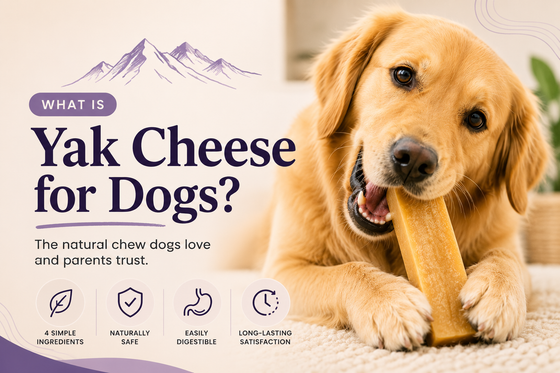
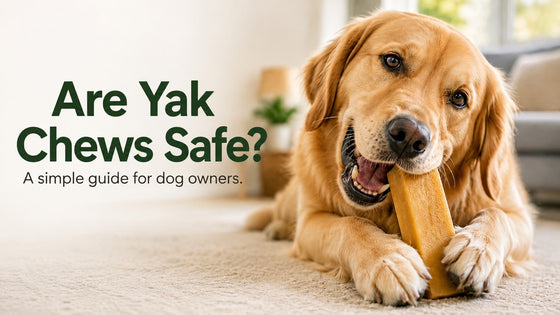
Yak chews are hard chews made from compressed, sun-dried yak milk cheese, using a traditional Himalayan process called chhurpi. At Yak Chew Plus, our Heritage Original contains four ingredients: yak milk, lime juice, salt, and baking soda. That is everything.
Why yak chews are a better alternative to rawhide:
Actually digestible. Yak chews are made from dairy protein (casein), which your dog's digestive system processes the same way it processes any protein-based food. Small pieces chewed off during normal use are broken down normally by digestion. There is no equivalent to the "undissolvable chunk" problem of rawhide.
No chemical processing. Yak chews are produced by pressing and drying, with no chemical treatments, bleaching agents, or artificial preservatives.
Naturally low in lactose. The traditional chhurpi process removes most of the lactose, making yak chews suitable for the majority of dogs, including many with dairy sensitivities.
Long-lasting. A correctly-sized yak chew will keep an aggressive chewer occupied for significantly longer than a rawhide of similar size. The cost per hour of chewing is much lower.
The microwave trick. When a yak chew wears down to a small nub, wet it and microwave it for 45 seconds. It puffs into a light, crunchy treat your dog can eat fully and safely. There is no equivalent for rawhide nubs, which are typically discarded.
Simple, transparent ingredients. No labeling ambiguity. You know exactly what your dog is consuming.
Bully Sticks
Made from dried beef pizzle. Single-ingredient in quality brands. Fully digestible, no splinter risk, no chemical processing. Dogs love them.
The main limitation for aggressive chewers is duration: bully sticks do not last as long as yak chews. They are also more calorie-dense, which matters for dogs managing their weight.
But for the question of "is it safer than rawhide," the answer is clearly yes.
Raw Bones (Knuckle Bones and Neck Bones)
Raw, uncooked bones from beef or pork, sold refrigerated or frozen. Significantly safer than cooked bones (which become brittle and can splinter dangerously).
Important caveats: require refrigeration, carry raw meat contamination protocols, and weight-bearing femur bones are very hard and can cause tooth fractures in forceful chewers. Knuckle bones are the safer choice.
For owners who are comfortable with raw food handling, raw bones are a legitimate rawhide alternative with better digestibility and no chemical processing.
What to Avoid
Cooked bones in any form: Kitchen scraps, smoked pet store bones, baked bones. The FDA specifically warns against these due to splintering risk.
Products labeled "rawhide free" without transparency on ingredients: "Rawhide free" does not automatically mean safe. Check the ingredient list of any alternative product rather than relying solely on the marketing claim.
How to Transition from Rawhide to a Safer Alternative
If your dog is accustomed to rawhide and you want to switch, here is a practical approach:
Step 1: Identify what your dog loves about rawhide. Is it the chewing sensation (hardness), the taste, the duration of the session, or simply having something to occupy themselves?
Step 2: Choose an alternative that matches those drivers. If it is about duration and chewing satisfaction, a yak chew is the strongest match. If it is about taste and flavor, bully sticks or a flavored yak chew from our Infused Collection may work better.
Step 3: Introduce the new chew while rawhide is not available. Dogs often resist novelty when the familiar option is present. A few sessions with no rawhide available makes acceptance much more likely.
Step 4: Supervise the first several sessions with the new chew to see how your dog interacts with it, then calibrate your supervision approach based on what you observe.
FAQs: Rawhide and Alternatives
Is it okay if my dog has had rawhide for years without problems?
Some dogs do consume rawhide over long periods without incident, particularly dogs that are not aggressive chewers and are always supervised. The absence of a documented problem does not mean the risks do not exist, but it is accurate that many dogs have rawhide without adverse events. The question is whether switching to a safer alternative makes sense given that equivalents are now widely available.
Are there any rawhide products that are safe?
There is no rawhide product category that eliminates all the concerns described above. The digestibility issue and the chemical processing concern apply to all rawhide regardless of brand or processing method. Some premium brands may have cleaner processing records, but the fundamental product characteristics remain.
My dog refuses to chew anything except rawhide. What do I do?
This is a common transition challenge. Try a flavored alternative (peanut butter, chicken, or a flavor your dog already loves) and introduce it when your dog is most interested in chewing (after exercise, in a calm environment). Consistency and removing rawhide as an option during the transition are the two most effective strategies.
Is rawhide illegal in other countries?
Some European countries have stricter regulations on rawhide production and chemical treatments than the US does. The EU requires more transparent labeling on pet products including chews. This is not the same as a ban, but it does reflect the fact that regulatory standards vary significantly by market.
The Bottom Line
Rawhide is not guaranteed to harm your dog, but the combination of poor digestibility, chemical processing, contamination history, blockage risk, and zero nutritional value makes it a product that is difficult to recommend when alternatives like yak chews and bully sticks offer equivalent or better chewing satisfaction with substantially better safety profiles.
The argument for rawhide has historically been availability and price. Those advantages have narrowed significantly as natural alternatives have become widely available at competitive price points.
If you are currently giving your dog rawhide, the transition to a safer alternative is worth making. Your dog will adapt, and you will have less to worry about.
Join the conversation